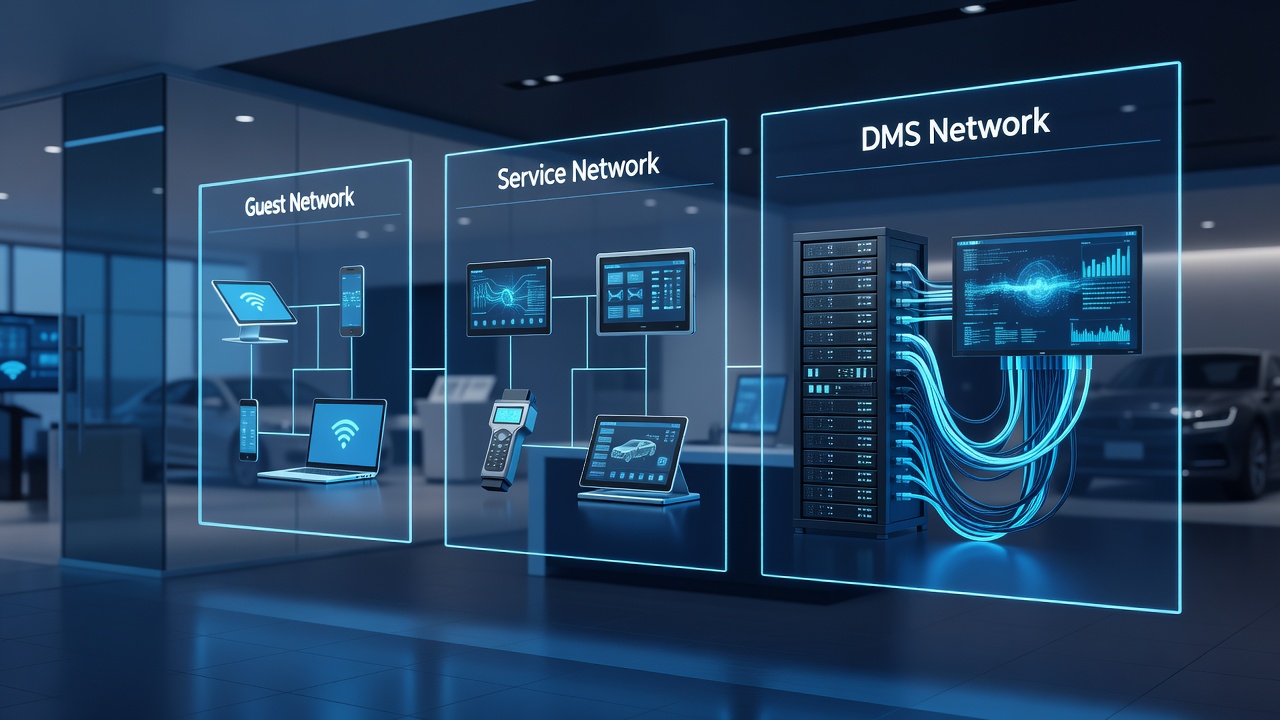
For auto dealerships in Quincy, Illinois, the modern showroom is no longer just a place to sell cars; it is a complex digital ecosystem. From the moment a customer walks through the front door to the moment their vehicle is serviced in the back, data flows through your systems. However, many dealerships still operate on a single, flat network. This setup is a security risk and a performance bottleneck. Separating your network into distinct segments for Guest Wi-Fi, Service Department operations, and the Dealer Management System (DMS) is no longer optional—it is essential for protecting customer data and ensuring business continuity.
Why Network Segmentation Matters for Dealerships
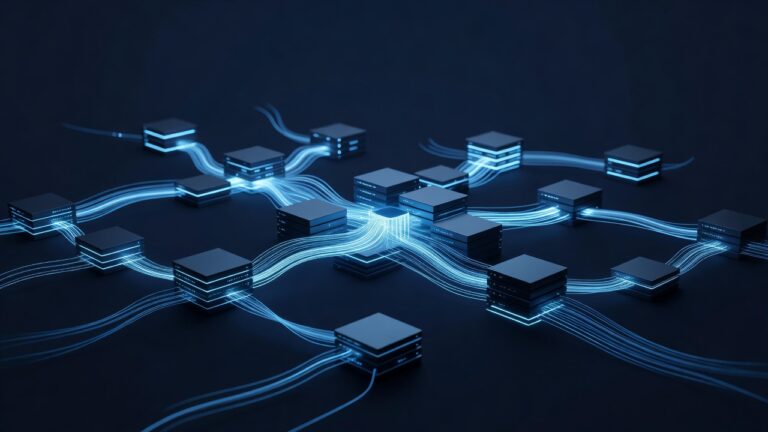
The primary reason to segment your network is security. When all devices are on the same subnet, a compromised guest laptop or an infected service tablet can potentially reach your DMS server. This is where your most sensitive data lives: customer credit information, vehicle history reports, and financial records. If a hacker gains a foothold on the guest network, they can pivot to the DMS, leading to costly data breaches and potential compliance issues with PCI-DSS.
Beyond security, segmentation improves performance. The DMS requires low latency and high reliability. If a group of customers on the guest Wi-Fi are streaming high-definition video or downloading large files, they can saturate the bandwidth, causing the DMS to lag. This slowness frustrates sales staff and service advisors, leading to longer wait times and a poorer customer experience. By isolating these traffic streams, you ensure that critical business applications always have the resources they need.
Segmenting the Guest Network
The guest network is the first point of contact for your customers. It should be designed to be user-friendly but strictly isolated from the rest of your infrastructure.
- Use a Separate VLAN: Create a dedicated Virtual Local Area Network (VLAN) for guest traffic. This logically separates it from your internal networks at the switch level.
- Implement Captive Portals: Use a captive portal to require users to accept terms of service or enter an email address. This not only adds a layer of security but also helps you capture leads for your marketing team.
- Limit Bandwidth: Configure Quality of Service (QoS) rules to limit the bandwidth available to the guest network. This prevents a few heavy users from consuming all available internet capacity.
- Isolate Clients: Ensure that guest devices cannot see or communicate with each other. This prevents a compromised device from scanning for other vulnerable laptops on the network.
Securing the Service Department Network
The service department is the engine room of your dealership. Technicians use tablets, diagnostic tools, and printers to manage vehicle repairs. This network needs to be robust and secure, but it does not need direct access to the DMS server.
- Dedicated Service VLAN: Place all service department devices on a separate VLAN. This allows you to apply specific security policies and bandwidth allocations tailored to the needs of the service bay.
- Controlled Access to DMS: Instead of giving every service tablet direct access to the DMS, use a jump host or a specific application gateway. This allows technicians to access the data they need without exposing the entire DMS server to the service network.
- Secure Diagnostic Tools: Many diagnostic tools connect directly to vehicles via OBD-II ports. Ensure these tools are on the service VLAN and that their firmware is regularly updated to prevent vulnerabilities.
- Print Server Isolation: Service department printers should be on the service VLAN. This prevents guest devices from printing to your service printers and vice versa, saving on toner and paper costs.
Protecting the DMS Core
The DMS is the heart of your dealership. It manages inventory, sales, service, and finance. Protecting it requires the highest level of security.
- Dedicated DMS VLAN: Keep the DMS server and its associated database on a separate, highly secured VLAN. Limit access to this VLAN to only the necessary staff and systems.
- Firewall Rules: Implement strict firewall rules between the DMS VLAN and the other networks. Only allow specific ports and protocols through. For example, allow HTTPS traffic from the sales floor VLAN to the DMS, but block all other traffic.
- Regular Backups: Ensure that your DMS backups are stored on a separate network segment or in the cloud. This protects your data in the event of a ransomware attack that encrypts your local servers.
- Patch Management: Keep the DMS software and its underlying operating system up to date. Work with your DMS provider to ensure that security patches are applied promptly.
Implementing the Change
Transitioning to a segmented network does not have to be a disruptive process. Start by mapping out your current network infrastructure. Identify all devices and their current locations. Then, plan your VLANs and firewall rules. Test the new configuration in a non-peak hour to minimize downtime. Finally, train your staff on the new network setup. Explain why the changes are being made and how they benefit the business.
By separating your Guest, Service, and DMS networks, you create a more secure, efficient, and reliable environment for your dealership. This investment pays off in reduced security risks, improved performance, and a better experience for both your staff and your customers. In the competitive auto market of Quincy, these operational efficiencies can give you the edge you need to succeed.