Running a restaurant in Keokuk means balancing the art of hospitality with the mechanics of technology. Whether you are serving riverfront views or neighborhood comfort food, your digital infrastructure is the backbone of your daily operations. For local owners, understanding how Point of Sale (POS) systems, guest Wi-Fi, and card data security interact is no longer just an IT concern; it is a core business strategy. When these three elements work in harmony, your staff moves faster, guests stay longer, and your financial data remains secure.
The Modern POS System as Your Command Center
Your Point of Sale system is more than a cash register; it is the central nervous system of your establishment. In the current market, cloud-based POS solutions have largely replaced legacy on-premise hardware, offering significant advantages for restaurants in the Keokuk area. These systems allow for real-time inventory tracking, meaning that when a table orders the last of your signature dish, the kitchen is immediately notified. This reduces waste and prevents the awkward moment of telling a guest their order is unavailable.
Furthermore, modern POS systems integrate seamlessly with other business tools. You can link your sales data directly to your accounting software, simplifying the end-of-month reconciliation process. For multi-location owners or those planning to expand, cloud-based POS allows for centralized management. You can view sales reports from all locations on a single dashboard, regardless of whether you are in the office or at home. When selecting a POS provider, prioritize local support. A vendor with a presence in the Quad Cities region can offer faster on-site troubleshooting than a national company that relies solely on phone support.
Guest Wi-Fi: A Small Cost with High Returns
Guest Wi-Fi has evolved from a nice-to-have feature to a baseline expectation. In Keokuk, where many guests are tourists visiting the riverfront or local residents seeking a change of pace, reliable internet access is crucial. A slow or disconnected network can lead to negative online reviews, which are particularly damaging for local businesses that rely on community reputation.
Implementing a dedicated guest network is the most effective way to manage this. Here is why you should separate guest traffic from your internal business network:
- Security Isolation: If a guest’s device has a virus or malware, a separate network prevents it from spreading to your POS terminals, kitchen printers, and office computers.
- Bandwidth Management: You can prioritize internal traffic. If a guest is streaming high-definition video, it will not slow down the POS system’s ability to process transactions or send orders to the kitchen.
- Marketing Opportunities: Many guest Wi-Fi solutions offer a “captive portal” where guests must enter their email address to connect. This allows you to build a marketing list for future promotions, special events, or new menu items.
When setting up your Wi-Fi, ensure your internet service provider (ISP) offers a business-grade plan with sufficient bandwidth. For a typical restaurant, a connection speed of 100 Mbps or higher is recommended to handle multiple simultaneous users without degradation.
Protecting Card Data: Compliance and Trust
Credit card processing is the lifeblood of any restaurant, but it also presents a significant security risk. The Payment Card Industry Data Security Standard (PCI DSS) is a set of security standards designed to ensure that all companies that accept, process, store, or transmit credit card information maintain a secure environment. While full PCI compliance is complex, there are specific steps Keokuk restaurant owners can take to mitigate risk and build trust with their customers.
First, ensure that your POS terminals use Point-to-Point Encryption (P2PE). This technology encrypts card data at the moment it is swiped, tapped, or inserted, and it remains encrypted until it reaches the payment processor’s secure server. This means that even if a terminal is compromised, the data is unreadable to hackers.
Second, consider using a mobile payment solution for tableside payments. This reduces the need for staff to carry physical card readers around the dining room, which can be lost or damaged. Mobile payments also speed up the checkout process, as guests can pay directly from their phones or the server’s tablet.
Finally, train your staff on basic security hygiene. This includes:
- Never writing down card numbers on paper.
- Keeping POS terminals clean and free of dust, which can cause read errors.
- Immediately reporting any unusual behavior, such as a terminal that seems slow or unresponsive.
Integrating the Three Pillars
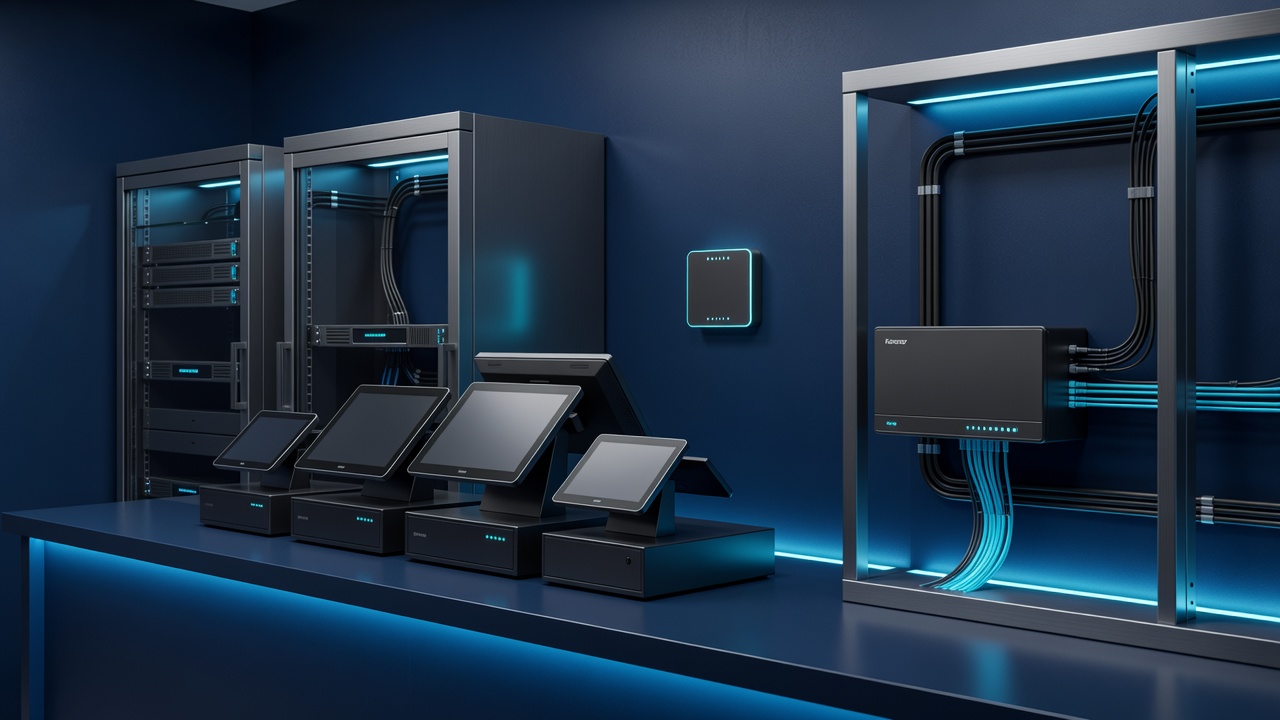
The true power of your restaurant’s IT infrastructure lies in the integration of these three components. A well-designed system ensures that your POS, Wi-Fi, and payment processing work together without friction. For example, when a guest connects to Wi-Fi, their device should not interfere with the POS system’s ability to process payments. Similarly, your payment processor should be able to communicate with your POS system in real-time to verify transactions and update inventory levels.
Regular maintenance is key to keeping this integration smooth. Schedule quarterly reviews with your IT provider to check for software updates, firmware patches, and security vulnerabilities. This proactive approach prevents minor issues from becoming major outages during your busiest dinner service.
Conclusion
For Keokuk restaurant owners, technology is not just a backend function; it is a front-of-house experience. A reliable POS system ensures efficient service, guest Wi-Fi enhances the dining experience, and robust card data security protects your business and your customers. By investing in these three areas and ensuring they work together, you create a resilient operation that can handle the demands of modern hospitality. Whether you are a long-standing local favorite or a new entrant in the market, a solid IT foundation will help you thrive in the competitive landscape of the Quad Cities.